How can we exhibit and expose the puzzling concerns of AI technologies to the public when AI is already such an everyday thing for many, yet also a deeply abstract “thing” that looks out at the world through a chatbot window? If a wide range of people are thinking about AI nowadays, some have more experience than others in tackling it as a shift in the media landscape. Yet these very same people are also challenged in their usual working process. For the Institute of Media Archaeology, a collective of artists led by Elisabeth Schimana for twenty years, working through ideas and media practices is best done through the making of exhibitions. With the workshop “whitebox ai”, the extended collective embarked on three days of conversations, in the company of curators from three museums (in Vienna, Graz, and St Pölten). Invited by my wonderful colleague Avital Meshi, a media artist and researcher at UC Davis, I had the chance to wrap up some of my most recent ethnographic experiments and reflections on chatbots and AI in science during a lovely retreat in the Lower Austrian Pre-Alps. As an ethnographer of art practices and a multimodal anthropologist of technologies, I took a ride with that wonderful bunch — fieldworking on the hospitable shoulders of friendly giants, and contributing to the communal soup of ideas and propositions.
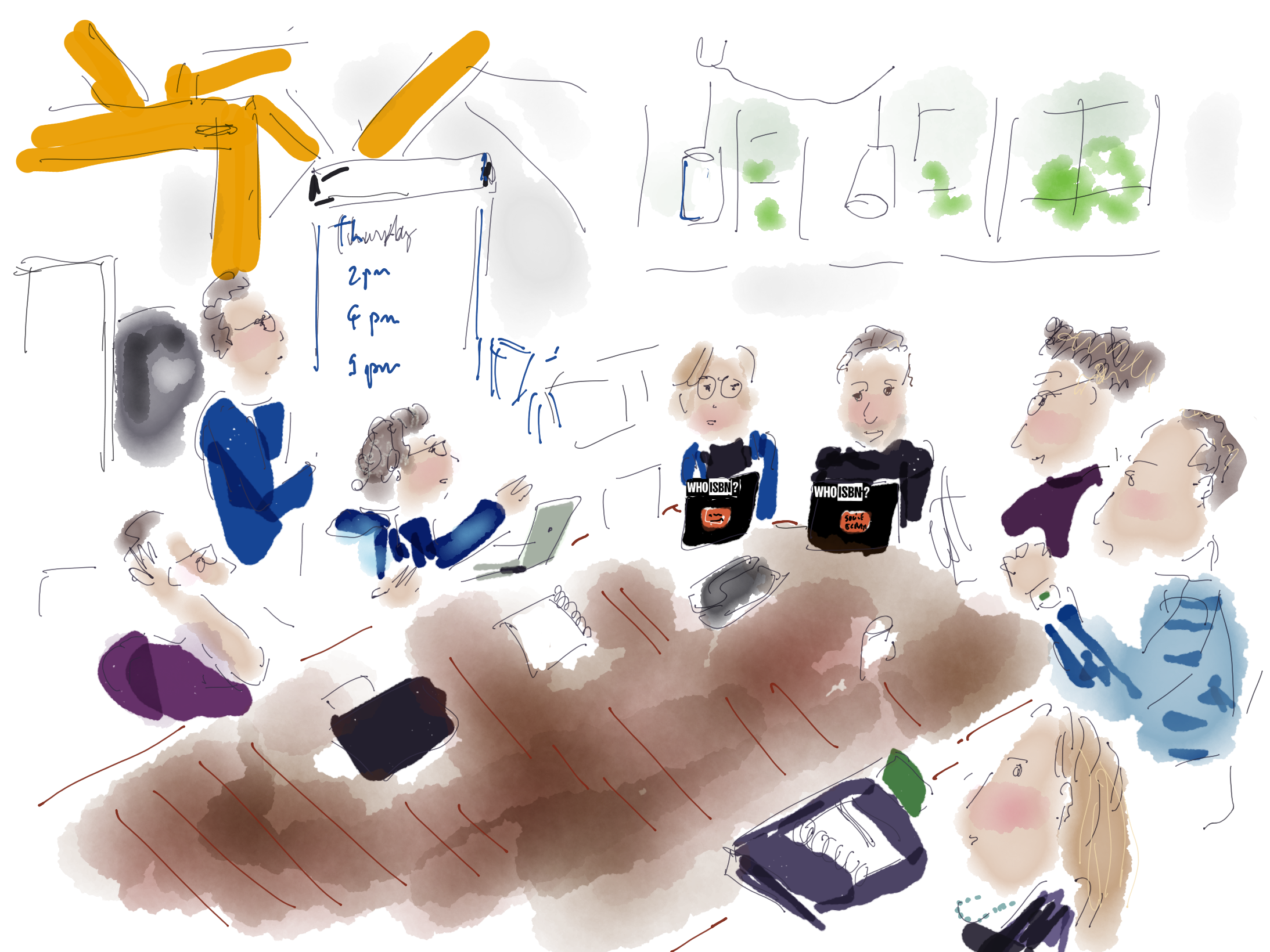
Can AI be considered a medium at all? If one takes it as a vehicle and a substrate for communication and thinking, yes, absolutely. And if it is to be taken as a milieu, even more so. The conversation around the massive and sensitively lacquered dinner table on the third floor of an artist house dedicated to printing in its many forms left a deep impression. I hope my coffee mug didn’t leave a mark on the table. But not much coffee was needed, because the discussion followed a halting rhythm, a breakbeat of technical, political and social aspects, entangled with the very facts about the AI industry that we were — and still are — shaping into an event that will reach a wide audience.
What I loved about the workshop was how the space was held by the IMA core team (Elisabeth, Seppo Gründler, Philip “Pi” Leitner and Andrea Sodomka), and how they made it so lively. Elisabeth lives in the next village, and she sourced the best food and cooked for us personally. Curating both the conversations and the menu, she had a sharp eye for making sure that everyone would contribute in one way or another, not only with words but also with their hands.
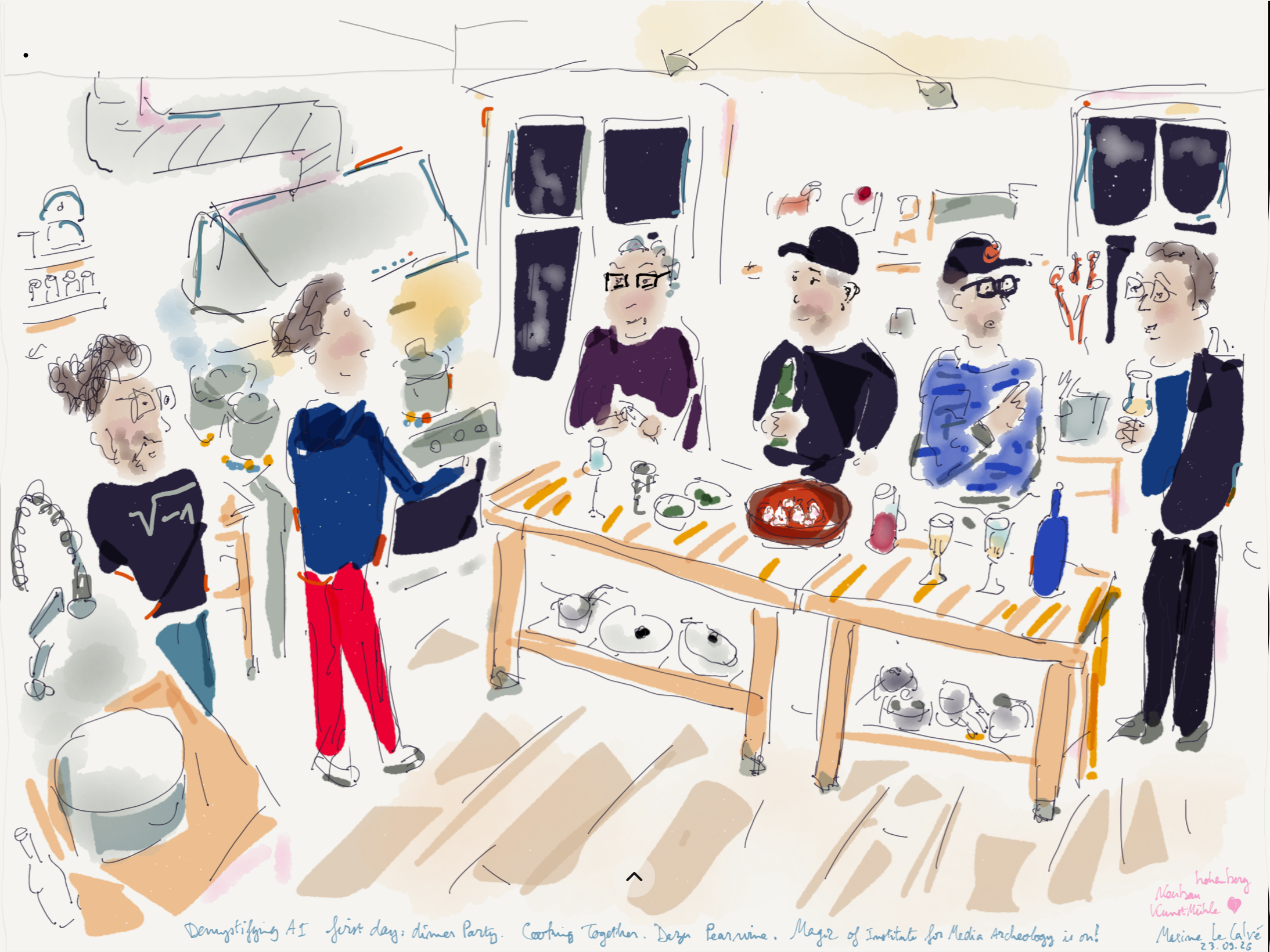
People! For Elisabeth and the core team, the exhibition should not have screens; it should be a place where visitors participate in installations and performances. Not pedagogical, but also not thoroughly political — or at least not in the worn-out repetition of anti-capitalist leitmotifs. How can we expose, in new and interesting ways, the hellish kitchen of AI corporations? How can we translate some of the hope invested in these technologies into something that could help our societies?
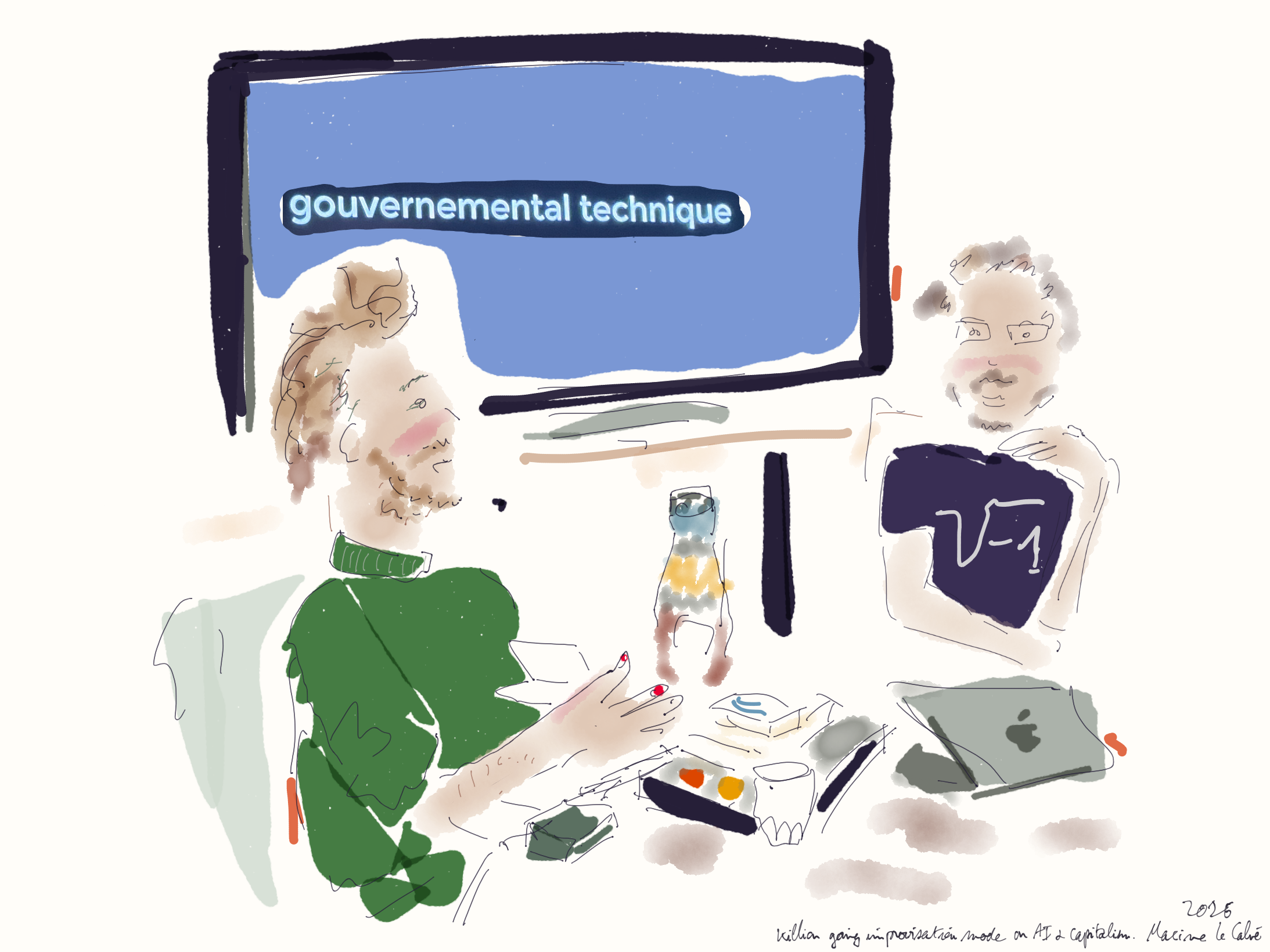
While the conversations kept coming back to the critical thinking that many of us believed the exhibition should deliver, the collaboration between Pi and Kilian Jörg brought this dimension in an elegant yet militant way. Thinking through Foucault is still a way to do some of the heavy lifting, but keeping it improvisational keeps it light on its feet and ready to dance with other propositions. Yes, we need to tackle the “data centre”, a physical, material point of discussion about resources and territory, which gives a concrete, earthly anchor to the debates, as Felix Stadler pointed out.
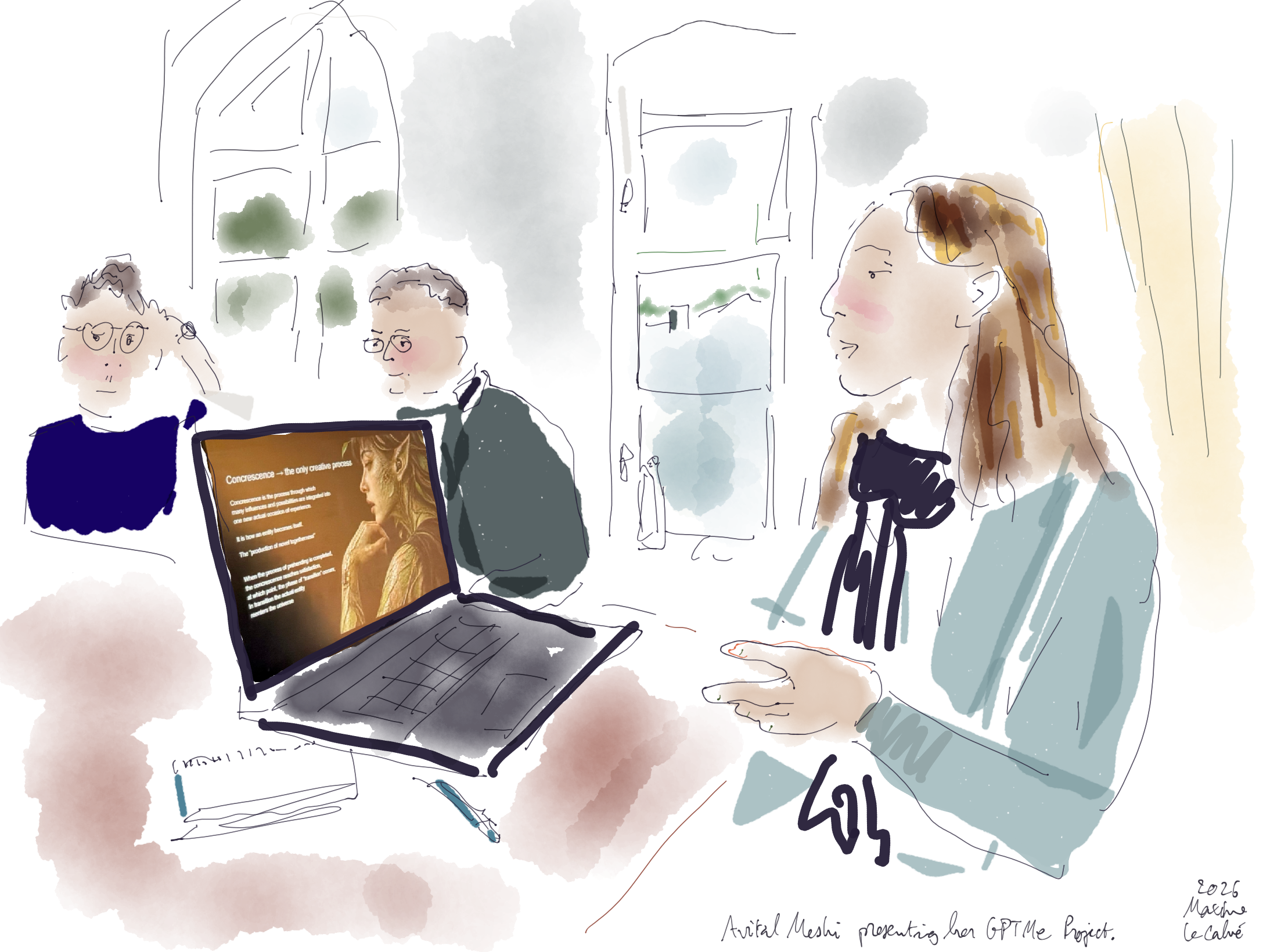
Avital and I presented our work in a joint session on “object–subject” oscillation. Her work has been featured in anthropology journals, in particular her “Séance” performance, in which she channels GPT through a wearable device, calling out the names of the audience’s dead relatives and friends and speaking whatever GPT brings through her lips — giving rise to incredible moments of presence, which echo older devices for channelling spirits through technology.
The oscillation of the chatbot between object and subject led to similar fits of presence in my own experiments with tarot-inspired ethnographic devices. Calling out examples of stagings and tricks, I drew on the recent article by Rodrigo Ochigame and Graham M. Jones, “Toward a phenomenology of mystification: The ambivalence of magic among AI technologists”, on mystification within the AI community. I then pivoted to my current research on how to reroute puzzlement practices towards other practices, more conducive to understanding and closer to what fieldwork is all about. We need to become more aware of its texture and what it does to us — but how do we bring this to wider audiences in a package that engages their curiosity as well as their burning sense of sovereignty?
By late afternoon, the group decided to let things sit after an already long day. Some of us took a spontaneous hike up the neighbouring hill — I had the excellent company of Felix — just in time to be drenched by a sudden rain. Moments of companionship are only intensified by an unprompted soaking. I wished I had packed better shoes. And another pair of trousers.
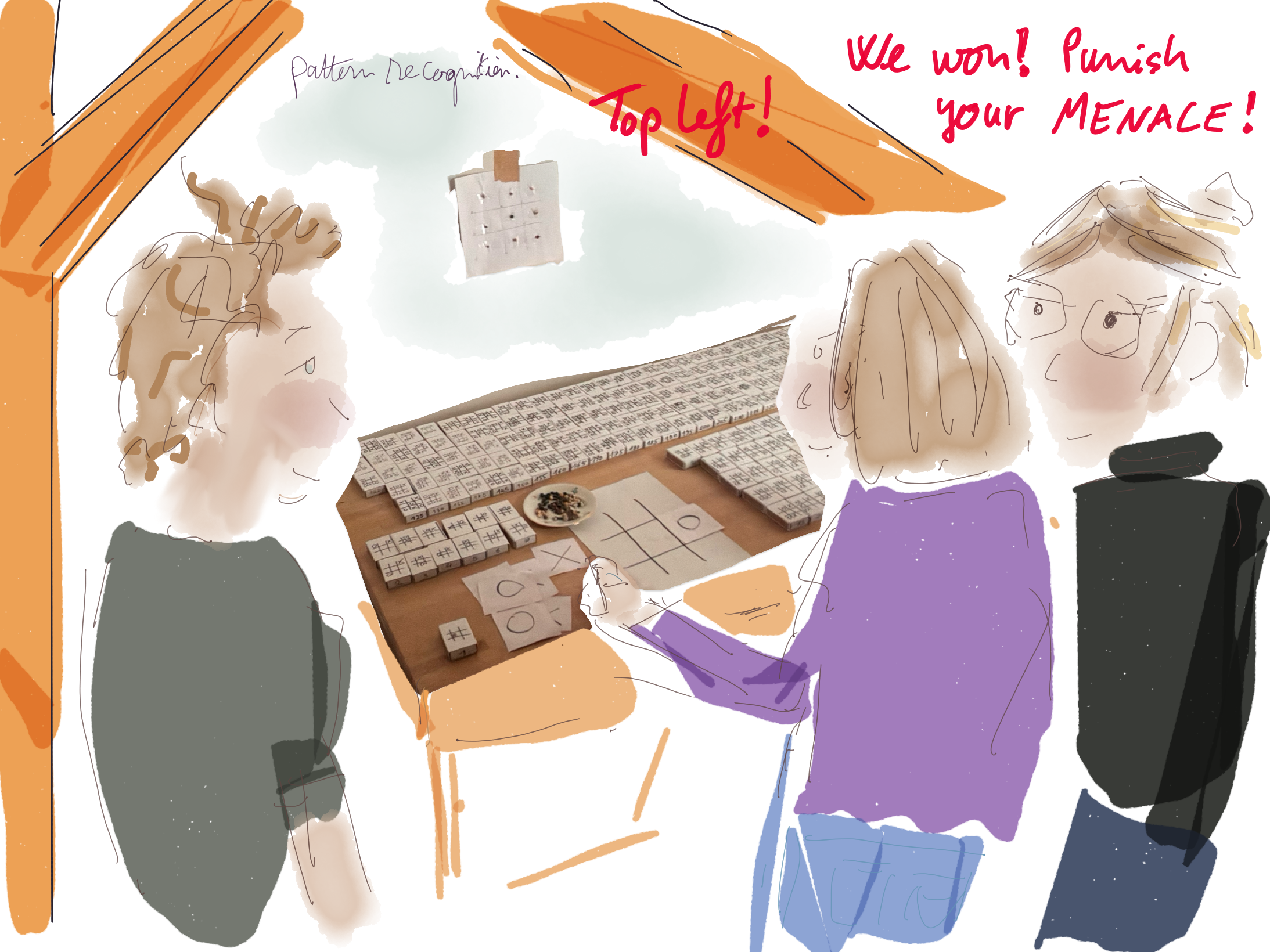
After dinner, dried off, we gathered for the evening’s last activity: a “laborious computing” session by the French artist collective RYBN. Taking up “MENACE” a now classic hands-on demonstration of how machine learning works — played by a a pile of hundreds of matchboxes teaching itself to play tic-tac-toe — Kevin Bartoli and Marika Dermineur explained how making two of the devices play against each other had the interesting effect of removing all fun from the experience, reducing the operators to a dull series of manipulations that felt very much like the hand labour of manufacturing AI models from the perspective of its “Mechanical Turks”. (One of their chosen fieldsites is the Amazon-owned platform itself, where they take on and analyse the tasks on offer.) By rewarding or punishing the device, the machine does learn to play better. But pitting two of them against each other makes the experience random and meaningless.
Is this what AI could do to us? Some of the participants seemed to think so. But time and again during the retreat, the members of IMA looked for ways to “make” things with it, to relay tactics of resistance, and to reclaim some of the openness to uncertainty and creative refusal that “open source” can rhyme with.