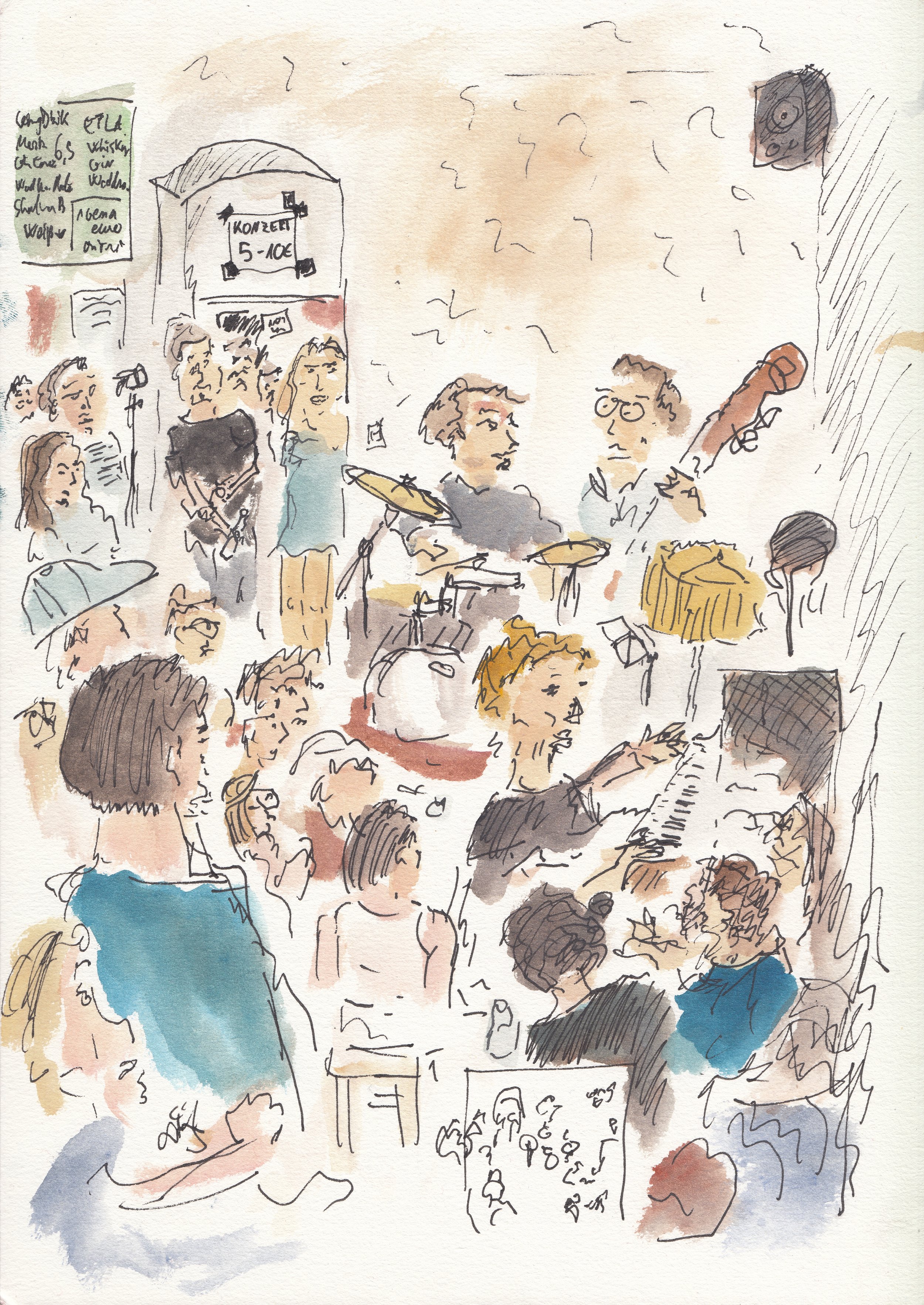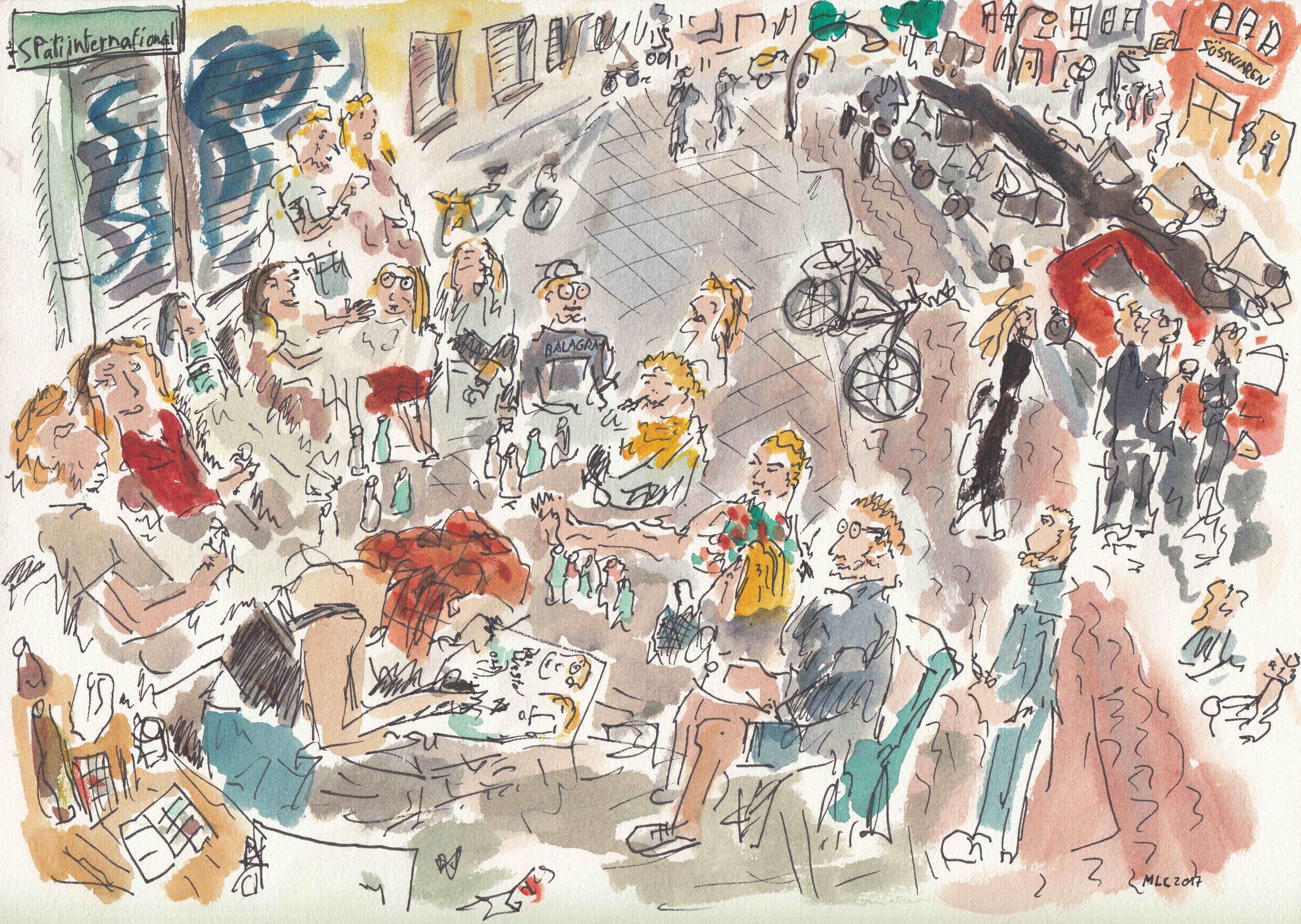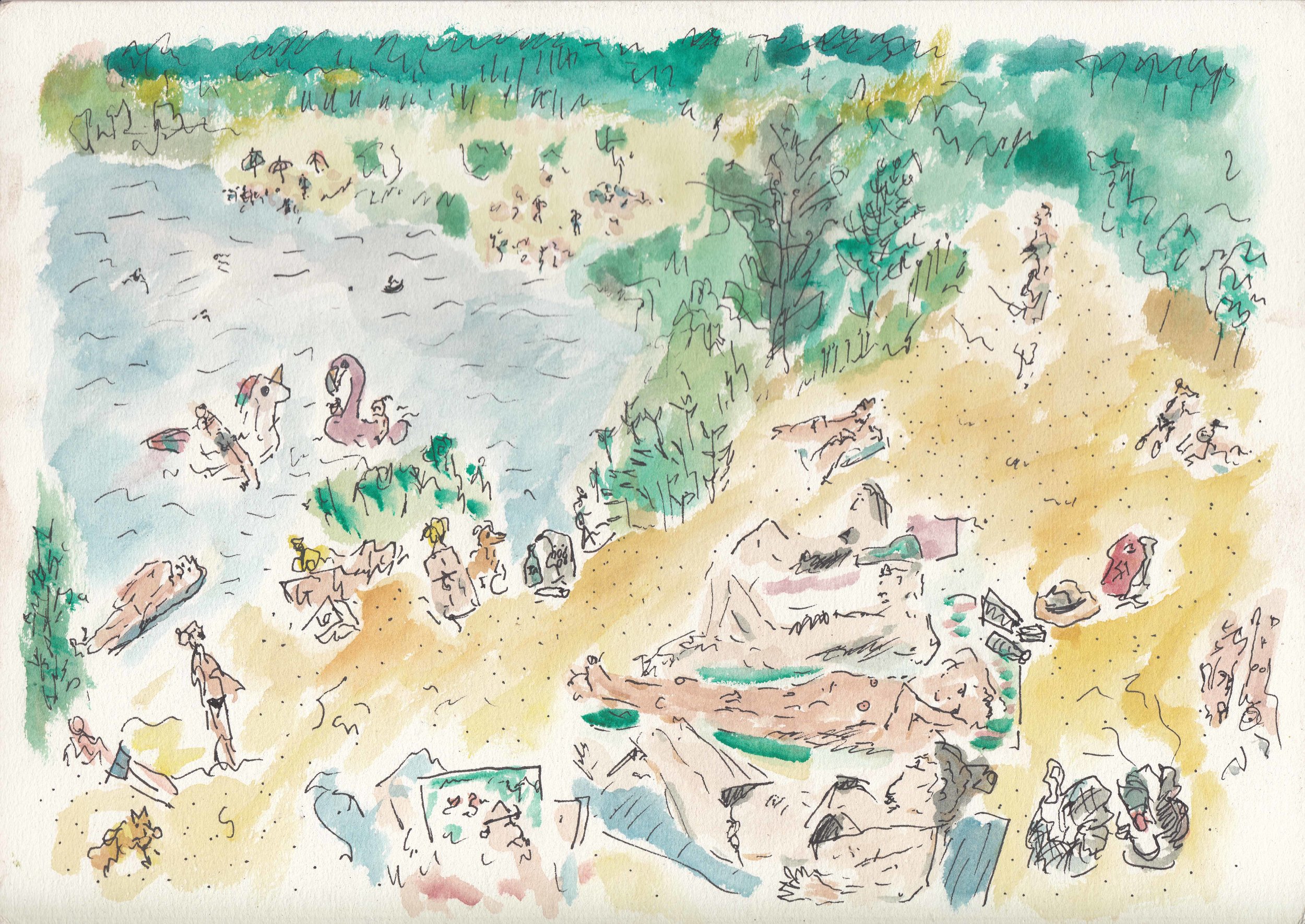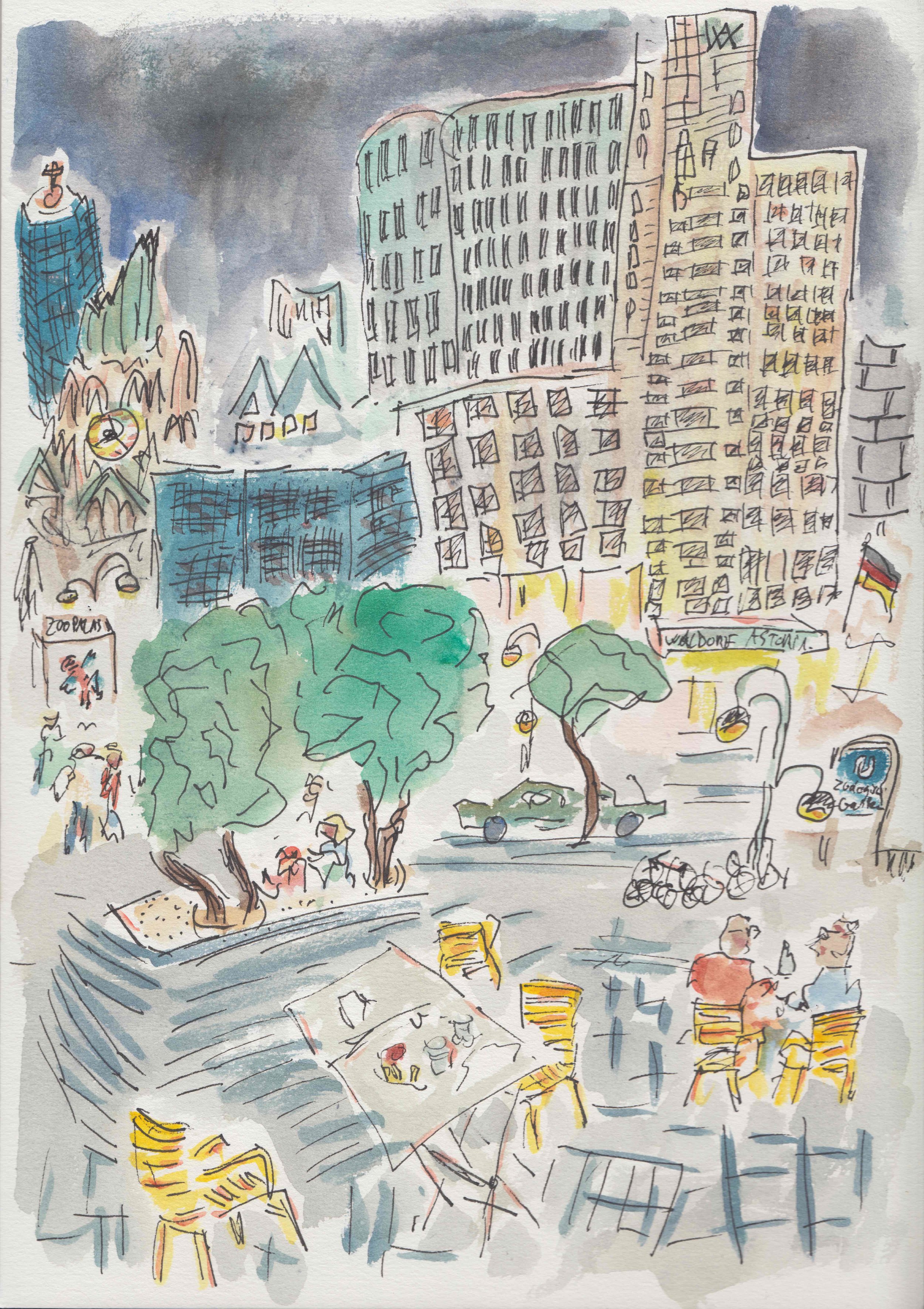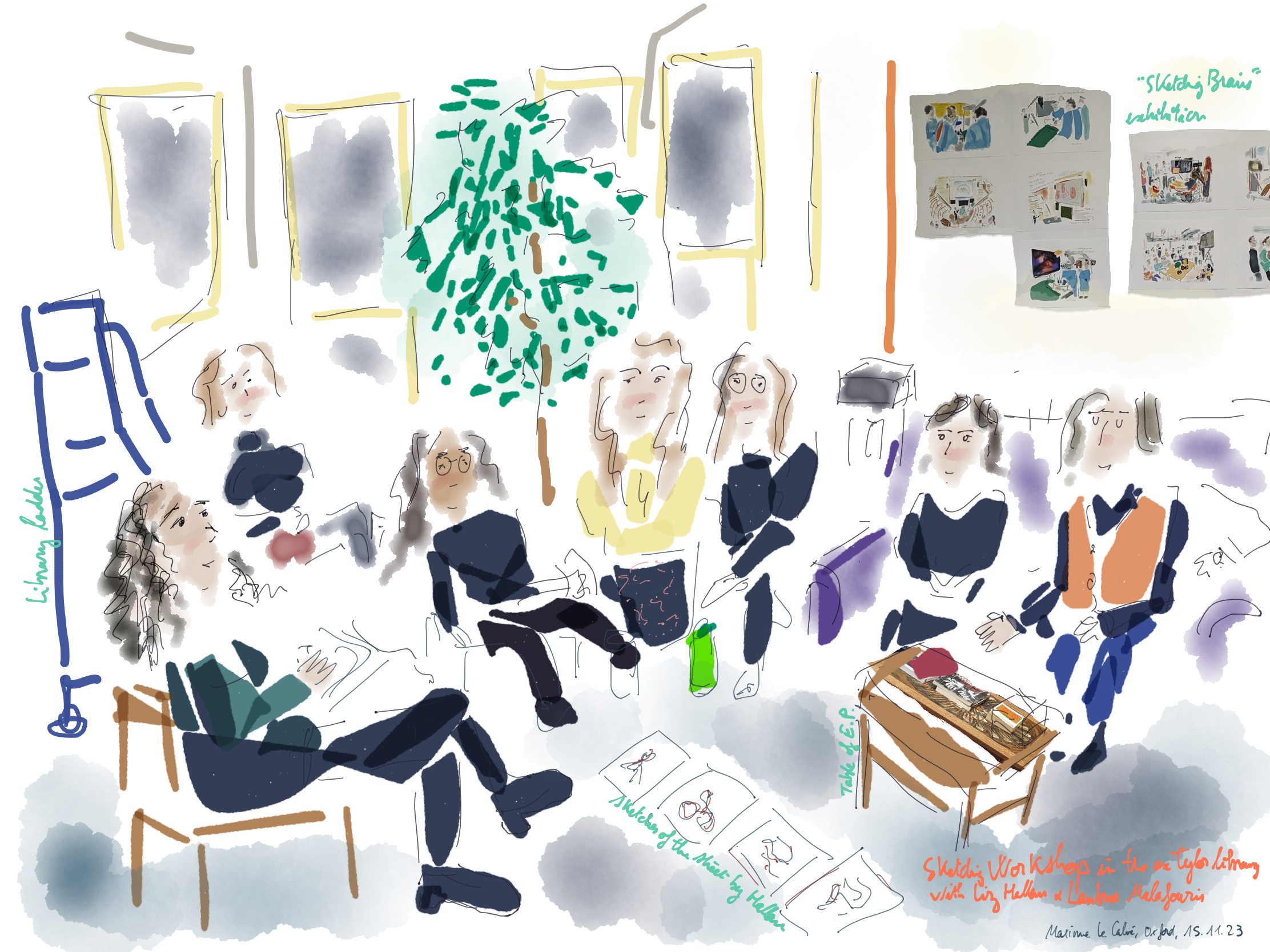
Drawing is my primary field method. As part of my ethnographic practice, I produce series of images on the spot — Indian ink and watercolour, or digital — working in a mode I call graphic ethnography: the use of live sketching as an investigative, collaborative, and argumentative device. I picked up this practice while conducting fieldwork with the painter and performance artist Jonathan Meese; mastering my own sketching style was a decisive step in my anthropological understanding of artistic knowing and making. Since that fieldwork epiphany, I have taken the method to neurosurgical operating theatres, design studios, VR laboratories, museums, and conferences.
Drawing in the field requires a longer exposure. Like others, I find these contemplative moments highly conducive to ethnographic epiphanies. But the drawings are not merely illustrations — they function as counter-images (Salter, Burri & Dumit 2017) that make visual arguments within anthropology of science and STS, and as lures that trigger conversations with epistemic partners about their own practice. Sharing graphic fieldnotes immediately with research participants is integral to a radical open-access workflow that I have developed across several projects, most extensively through the Sketching Brains participant exhibition at the Charité and through AnthroReverb, the experimental publishing platform I founded.
For a theoretical and methodological account of this practice, see:
Le Calvé, M. (2024). "Couper dans le cerveau pour le 'fun'." Revue d'Anthropologie de la Connaissance.
Le Calvé, M. (2023). "Participant Growing-Places in and of the World: Rendering the Transformative Atmosphere of a Contemporary Opera in the Making." In Exceptional Experiences, Berghahn Books.
Le Calvé, M. & O. Gaudin (2019). "Depicting Berlin's Atmospheres: Phenomenographic Sketches." Ambiances.
Le Calvé, M. (2021). "Drawing a Home for Anthropology." Entanglements 4(1).
Many of these projects can be accessed on AnthroReverb and on my fieldwork blog.
Sketching Brains exhibition and book project

Graphic fieldnote from “A day with Prof. Vajkoczy,” one of the series of the Sketching Brains participant exhibition, digital, ©mlc


Producing pictures on the spot requires a longer exposure. Like others, I find these contemplative moments to be highly conducive to ethnographic epiphanies. My drawings are both field notes and lures for telling ethnographic stories.
Graphic fieldnote from an experimental training of medical students in Berlin, indian ink and watercolor, ©mlc

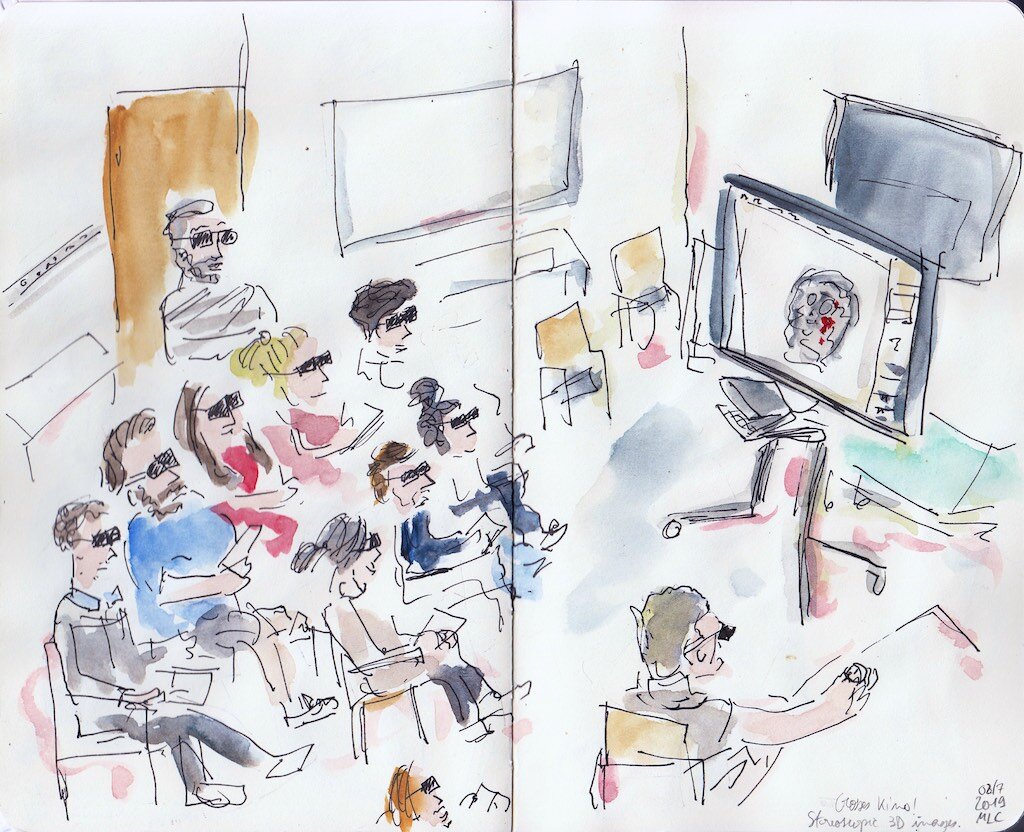
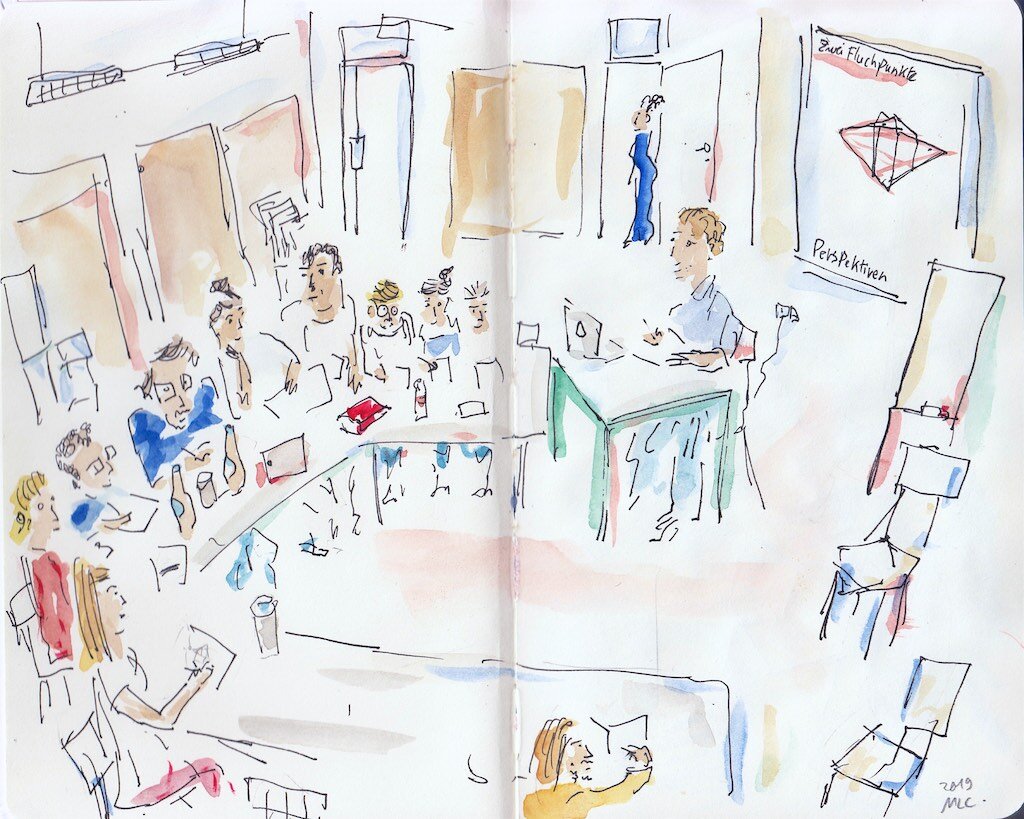
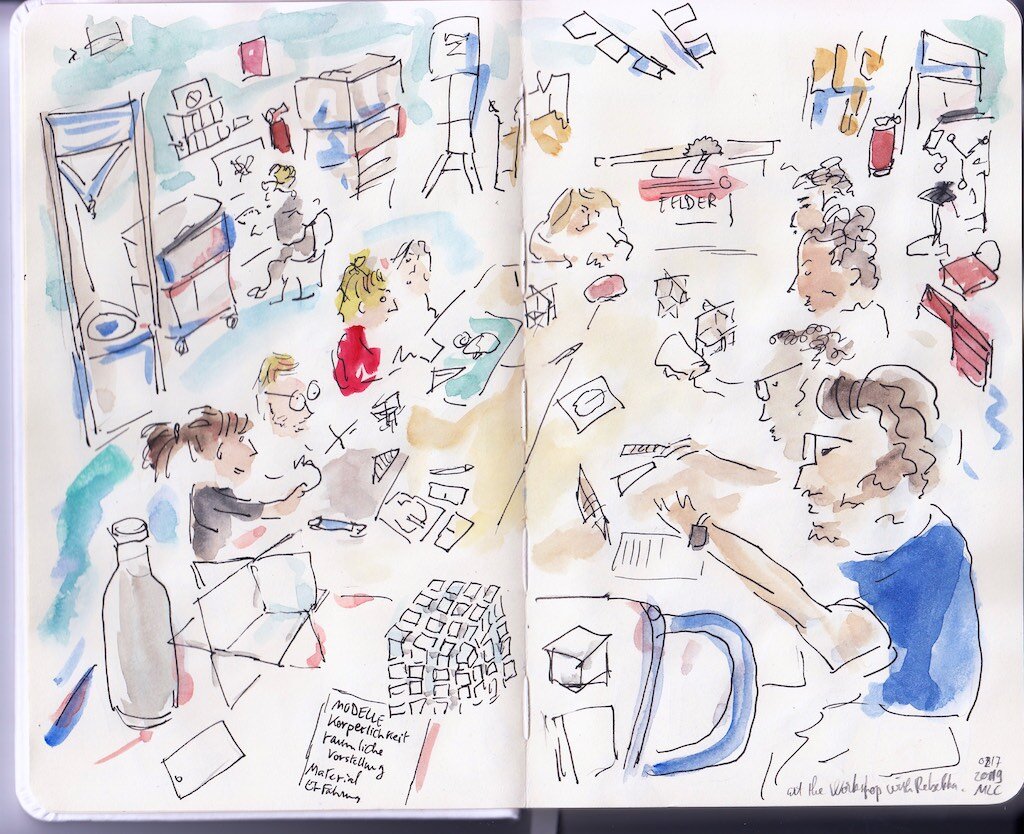
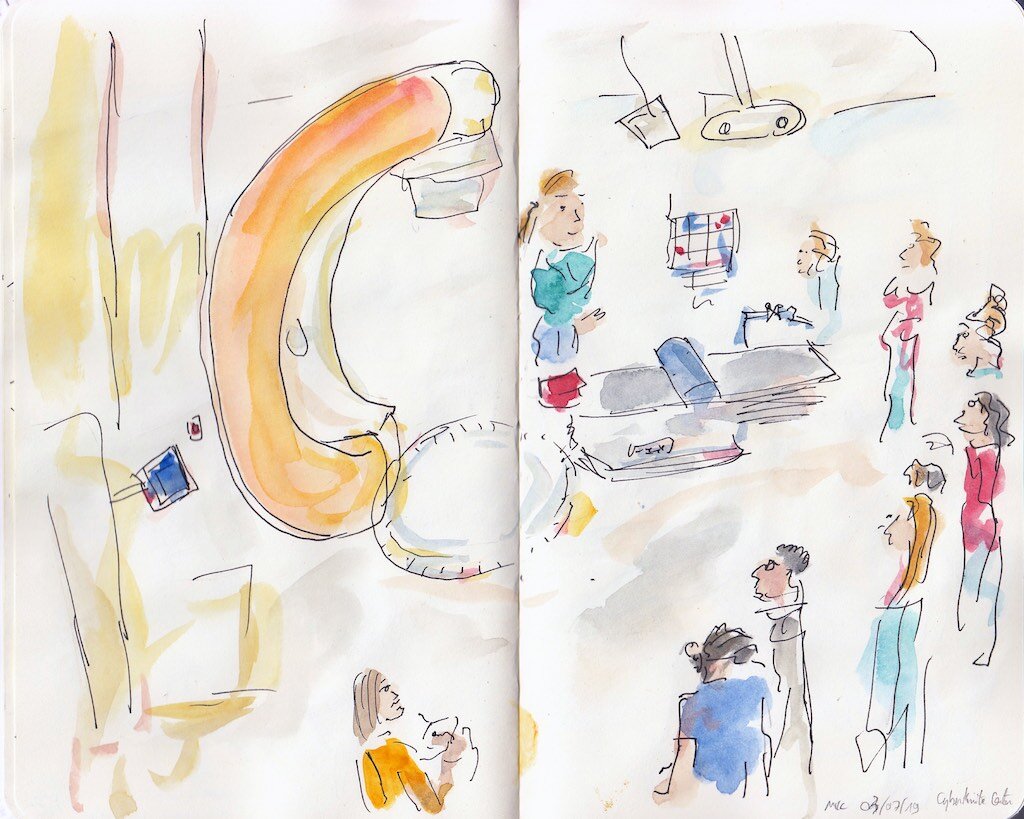
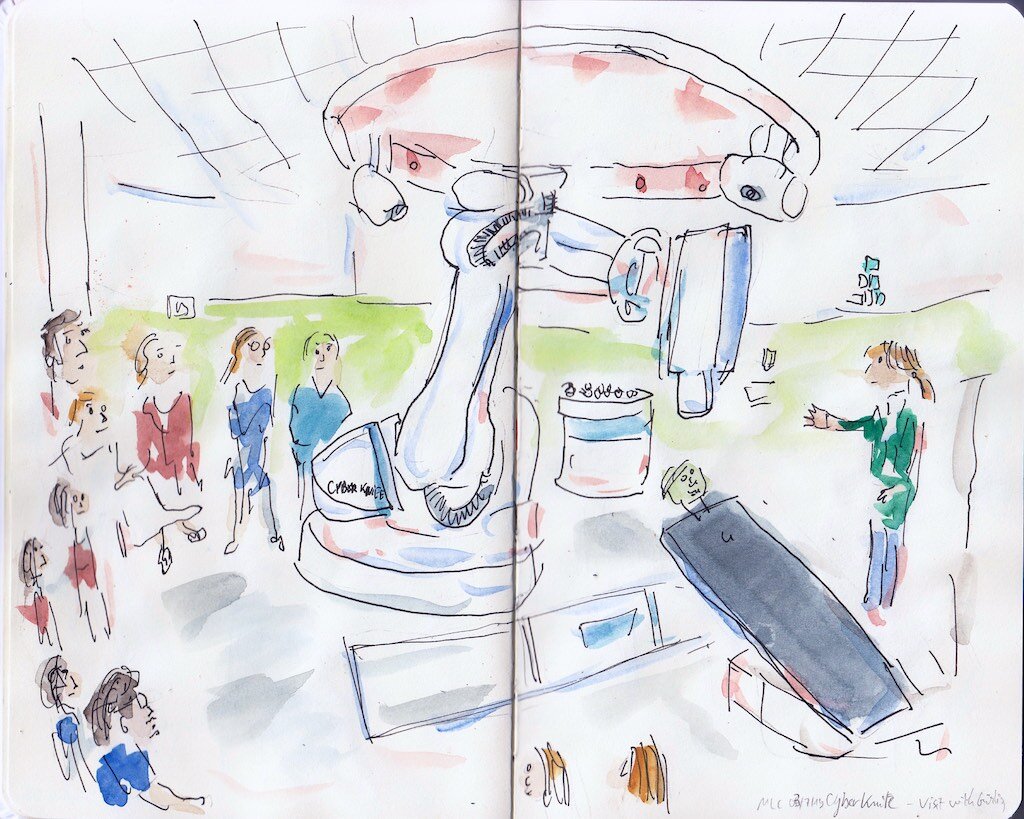
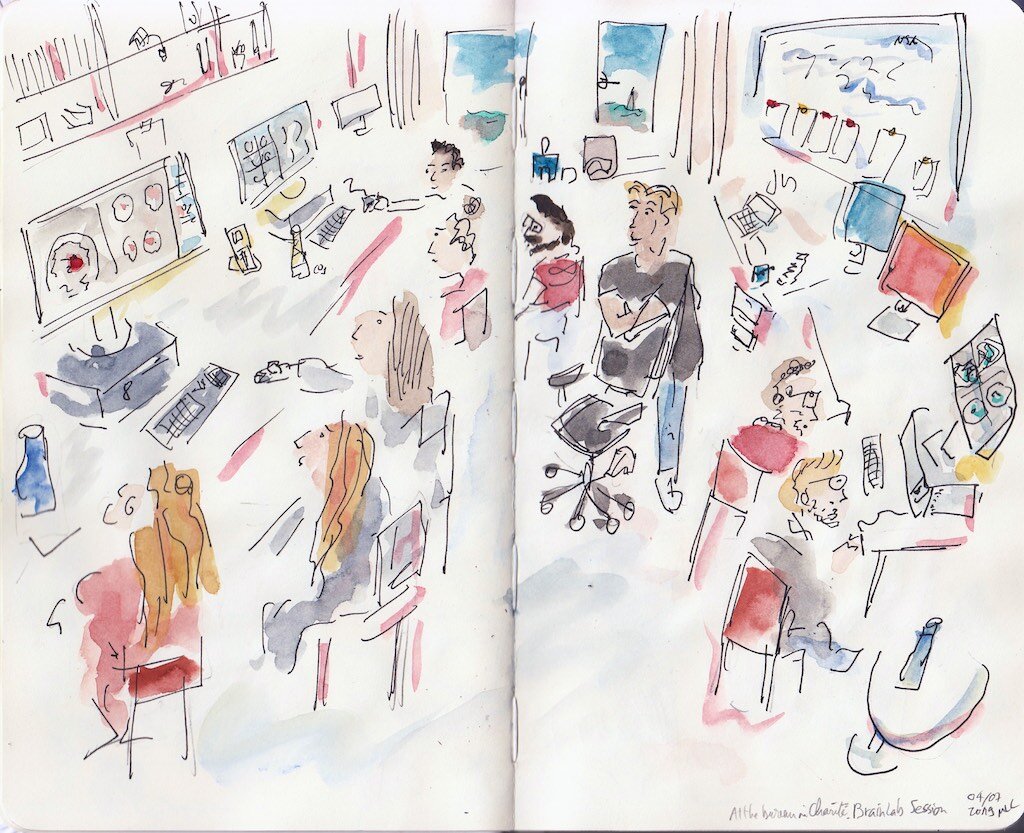
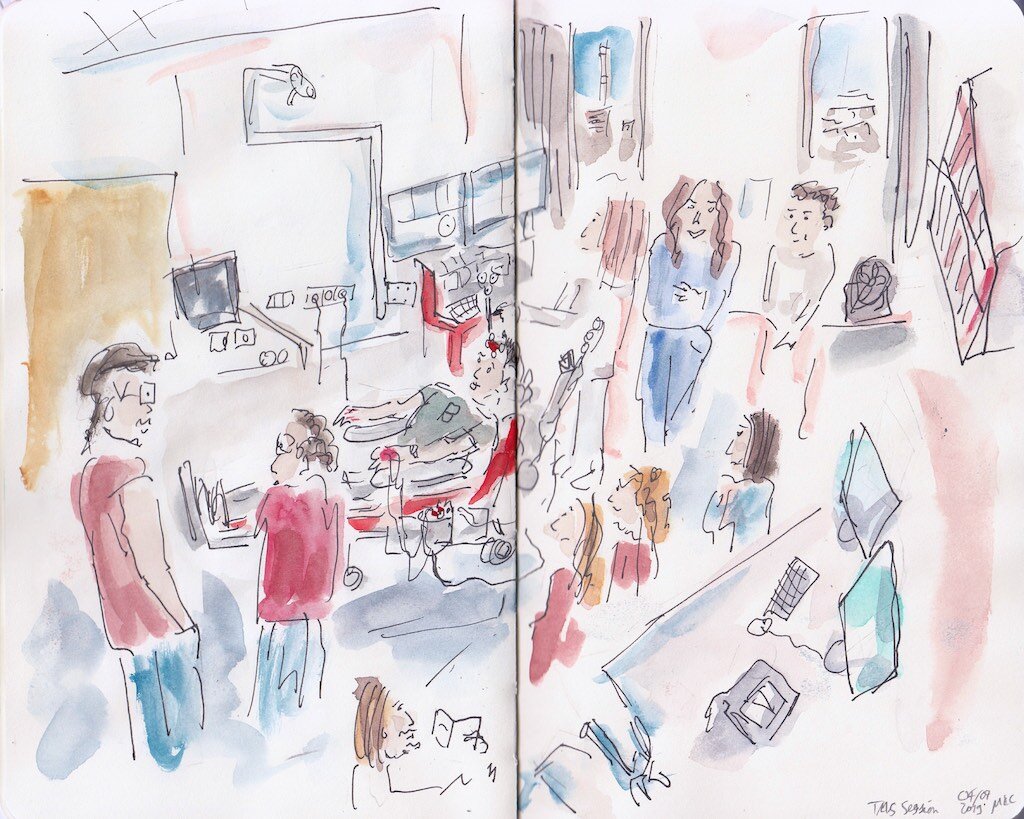
Documentation of VR production with Jonathan Meese (2018)
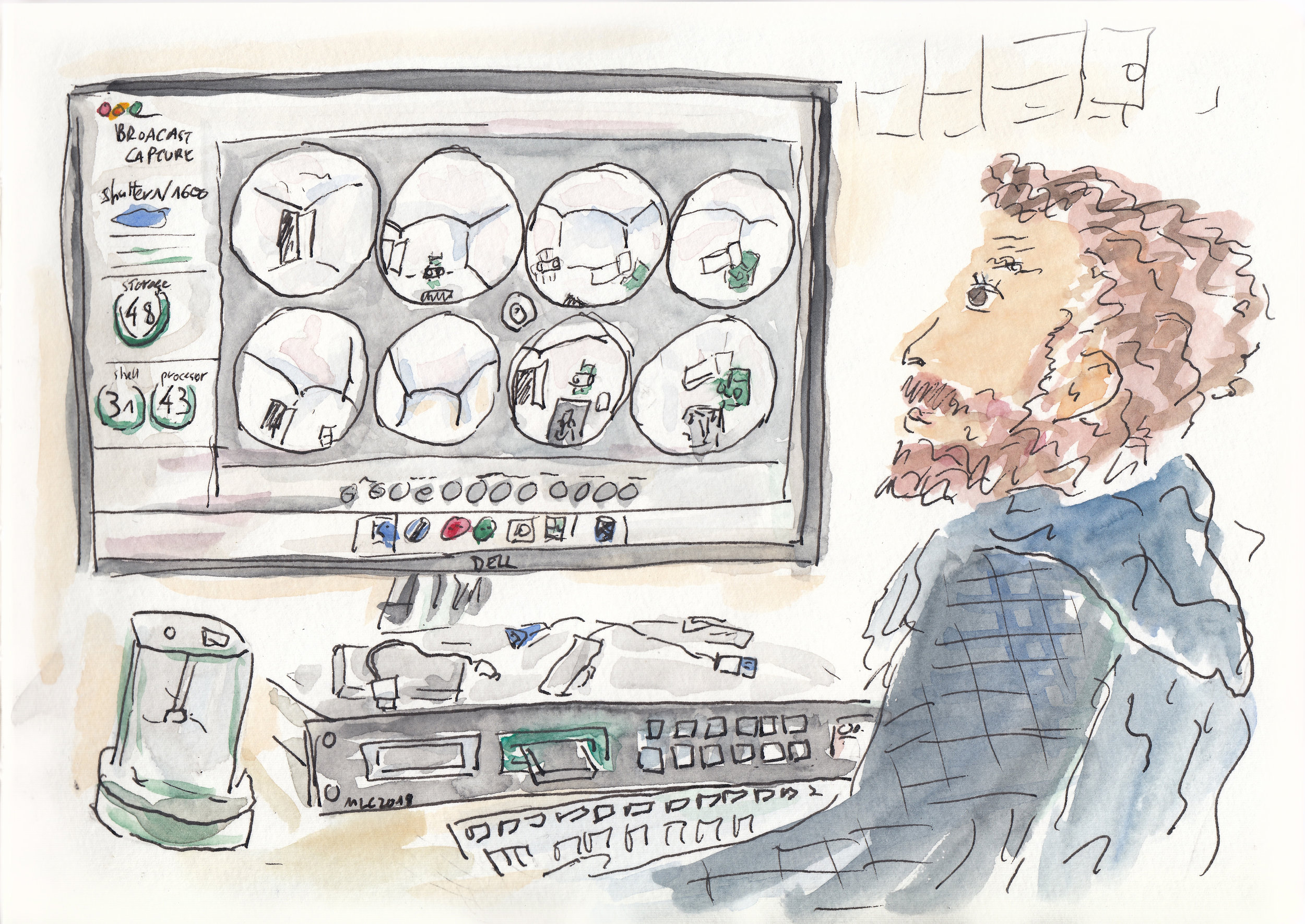
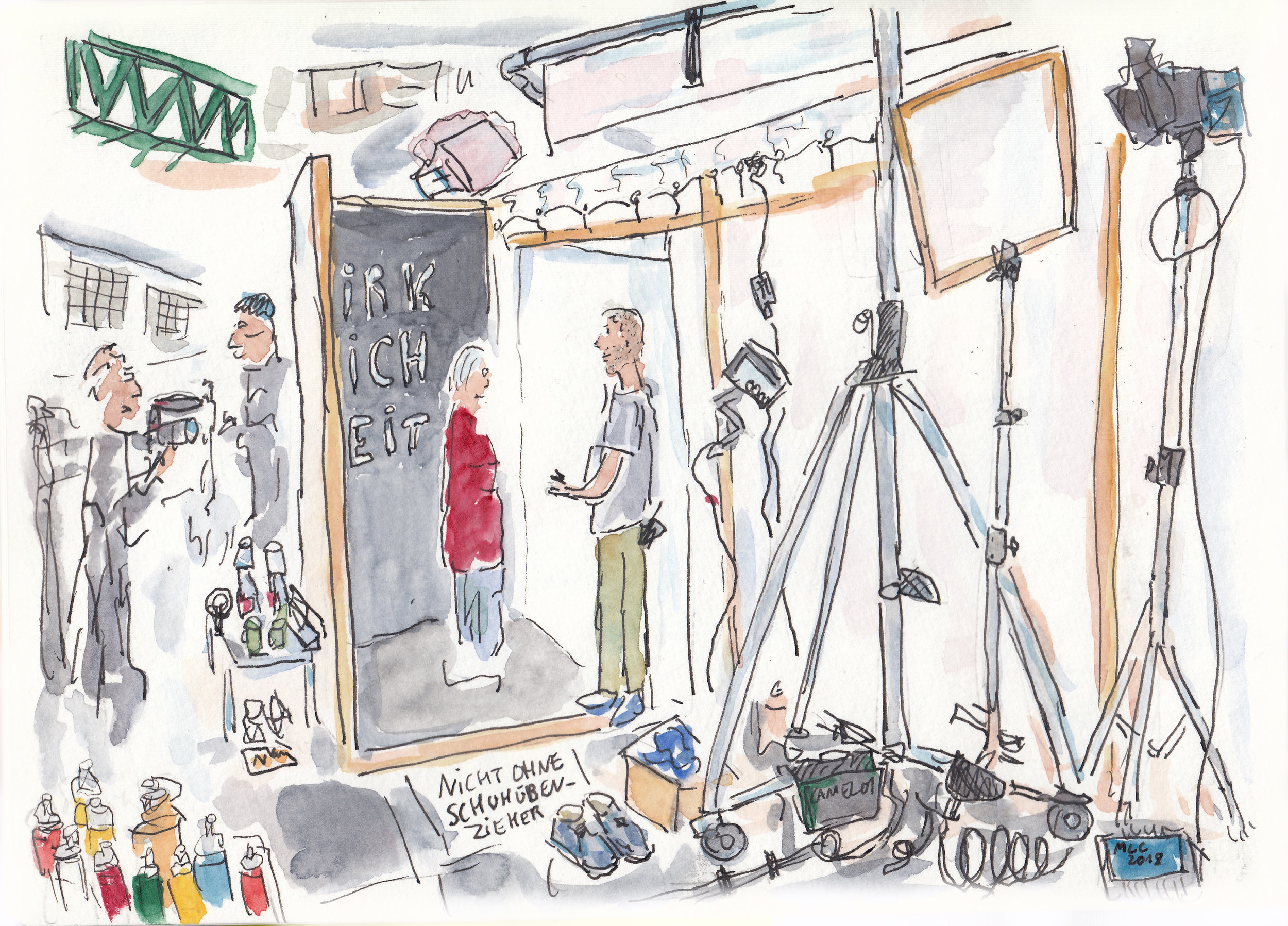
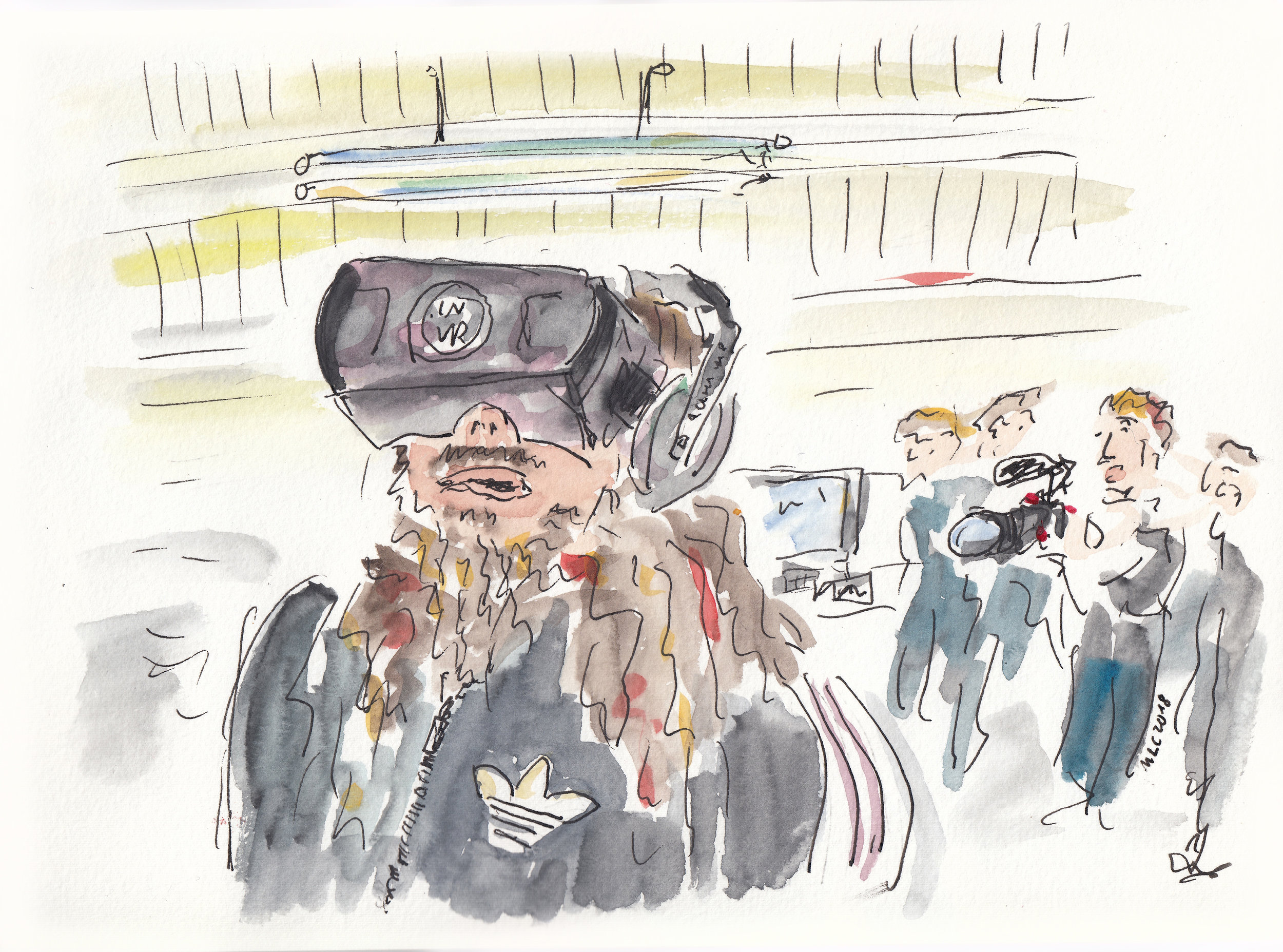
The use of loose perspective enables me to capture a space as if it was wrapped around the viewer, and to gather micro-scenes and things in my carrier bag to examine later. My pictures also participate in the situations, as they trigger interest and reactions. I’m often told that they convey appropriately the “atmospheres” of the moment. These remarks have fueled my research on ambiances, their particular role in social contexts and the way we can study them in our anthropological practices.
Berlin atmospheres (2017)